China
An April 2025 journey through Shanxi, China — from the ancient city walls of Datong to the cliff-side Hanging Temple.
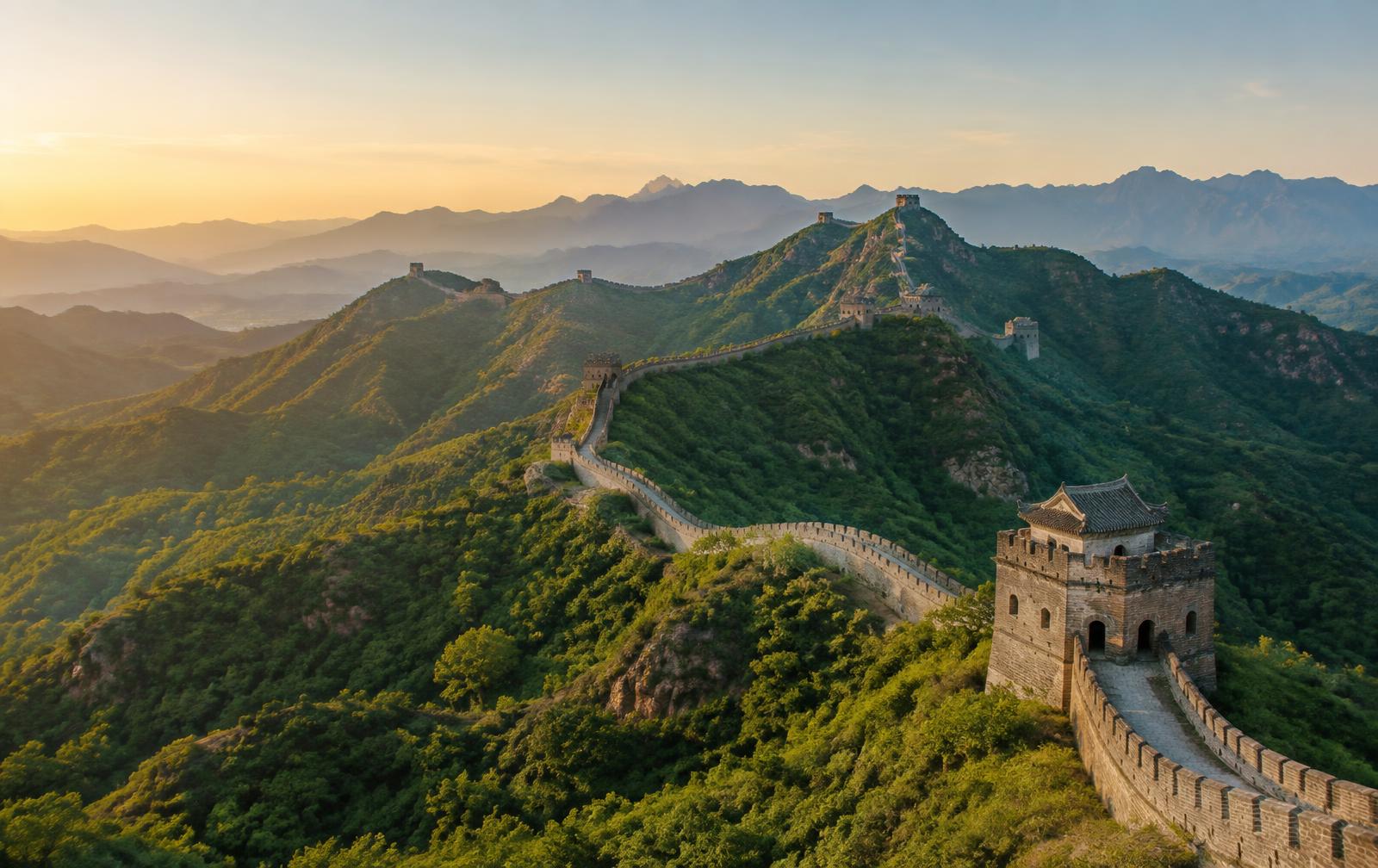
The Great Wall, morning light
From the notebook
China · April 2025
Places, stories, photographs, and videos from the journey will be gathered here as the journal grows.
Day 2 · April 2025
晋祠
Jin Temple
Jinci, or Jin Temple, lies 16 miles south-west of Taiyuan at the foot of Xuanweng Mountain at the Jin Springs — the most famous temple complex in Shanxi. It was founded around 1,400 years ago and grew over the following centuries into a vast collection of over 100 sculptures, buildings, terraces, and bridges.
Photographs from this stop will be added here.
Taiyuan · Shanxi · China
Day 2 · April 2025
平遥古城
Pingyao Ancient City
Pingyao, a walled city in central Shanxi, is renowned for its significant role in Chinese economic history, with well-preserved Ming and Qing urban planning and architectural features.
Established in the 14th century CE, Pingyao has served as the seat of local government since at least the Qin dynasty. By the 16th century it had emerged as a regional financial hub, and some historians hold that it was the financial centre of the Qing Empire in the late 19th century.
The ancient city's construction dates back to the reign of King Xuan of Zhou (827–782 BC), spanning a history of over 2,800 years. It became a UNESCO World Heritage Site in 1997.
Photographs from this stop will be added here.
Pingyao · Shanxi · China
Day 3 · April 2025
王家大院
Wang Family Grand Courtyard
“王是一个姓,姓是半个国,家是一个院,院是半座城。”
“Wang is a surname, the surname half a kingdom; a family is a courtyard, the courtyard half a city.” The royal family compound — known as the Chinese Folk Forbidden City and the Forbidden City of Shanxi — is said to have begun with the legend of a tofu workshop.
Over more than 300 years of the Ming and Qing dynasties, the Wang family built a grand mansion in Jingsheng Ancient Town, Lingshi County, Shanxi Province. Its 250,000 square metres of building footprint are roughly 100,000 square metres larger than the Forbidden City itself.
The courtyard follows the “front hall, back bed” architectural style, with the east and west sides symmetrical and rising from low to high — fully expressing the traditional Chinese hierarchy of dignity and inferiority, order of high and low, and the separation of men and women, inside and out. There are 123 large and small courtyards and more than 1,000 houses, arranged in clusters — likely because the region saw frequent wars, so clustering served both self-protection and defense.
Though not as magnificent as the Forbidden City, it is not costly in its essence, and carries a natural, simple atmosphere.
Photographs from this stop will be added here.
Lingshi County · Shanxi · China
Day 5 · April 2025
壶口瀑布
Hukou Waterfall
The Yellow River narrows here from its original 300-metre width to a mere 50 metres. Steep stone walls flank both sides of the river, and the estuary's narrowness resembles the mouth of a pot — hence the name Hukou, “kettle mouth.”
The river's surface is compressed to just 20 to 30 metres across, and water flowing at roughly 1,000 cubic metres per second thunders over cliffs more than 20 metres high.
Photographs from this stop will be added here.
Ji County · Shanxi · China
Day 6 · April 2025
甘泉大峡谷
Ganquan Canyon
Ganquan Canyon, in Ganquan County, Shaanxi Province, is renowned for its landscapes. It takes in Birch Ditch, Leopard Ditch, Longba Ditch, Peony Ditch, One-line Sky, and other scenic stretches — the most captivating of them Birch Ditch.
Formed over millions of years by the impact of a powerful earthquake, then worn down slowly by centuries of rainfall, the canyon has earned the name “China's Antelope Canyon,” drawing photographers to its narrow, sculpted walls.
Photographs from this stop will be added here.
Ganquan County · Shaanxi · China
Day 7 · April 2025
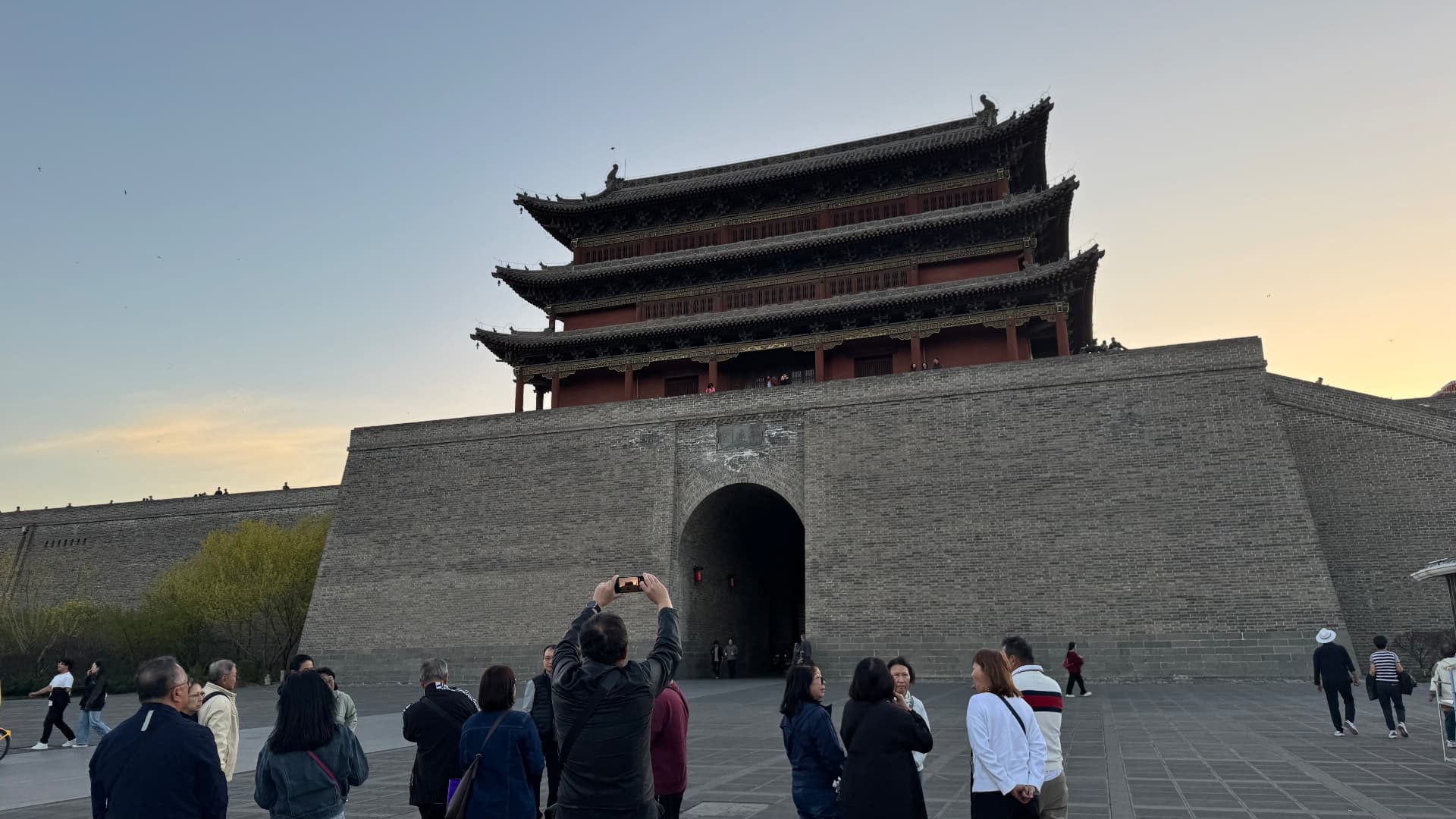
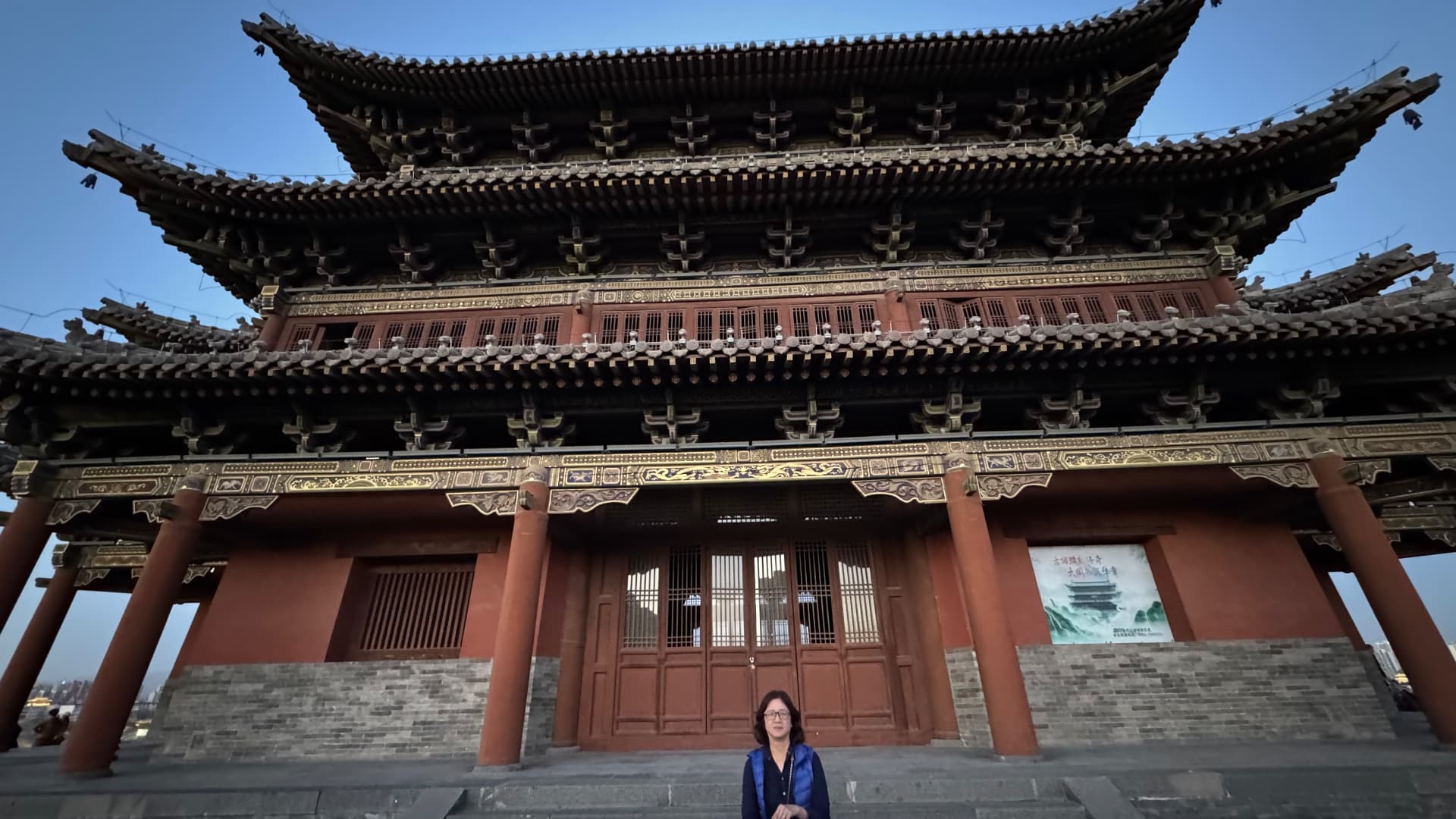
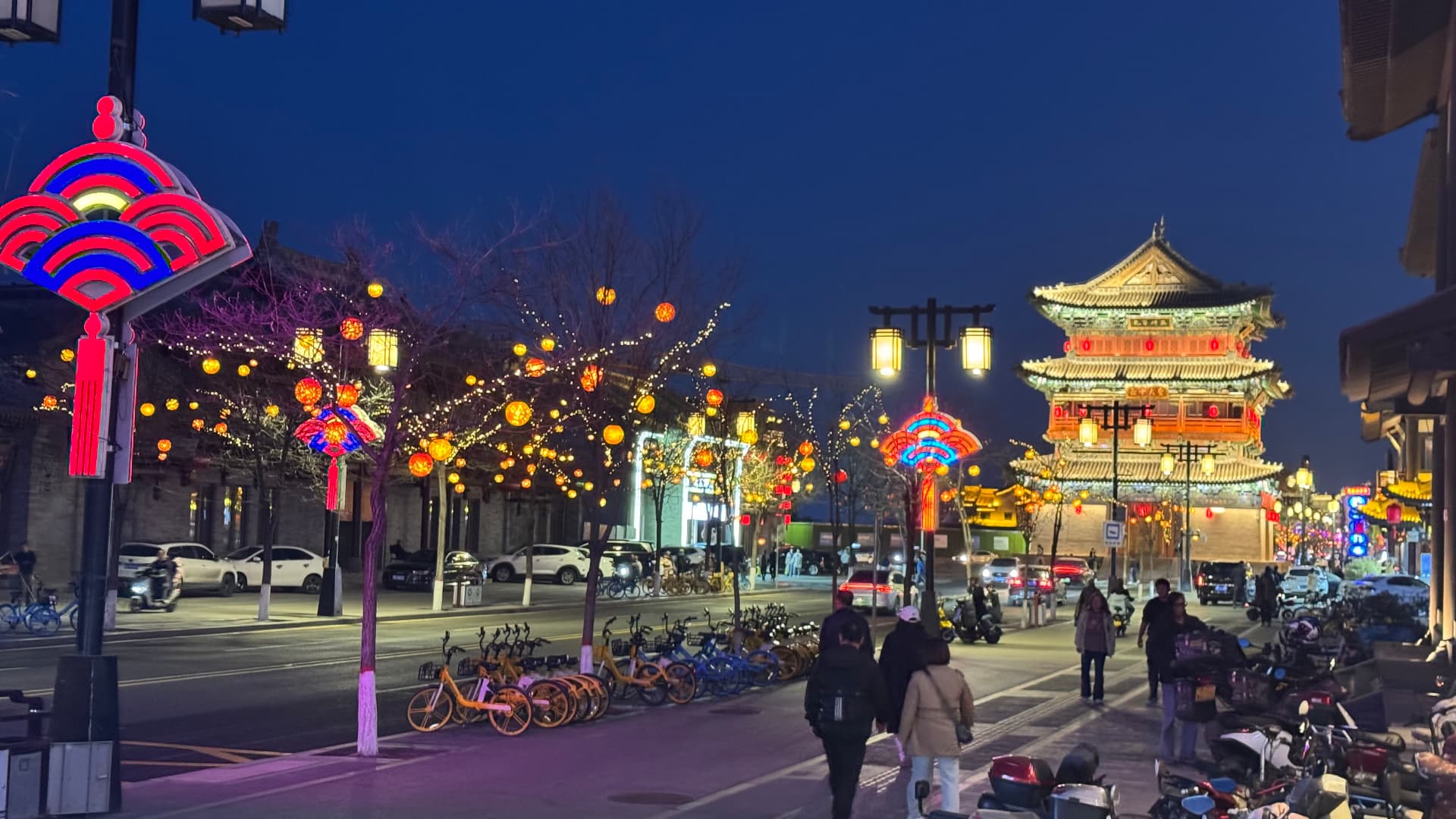
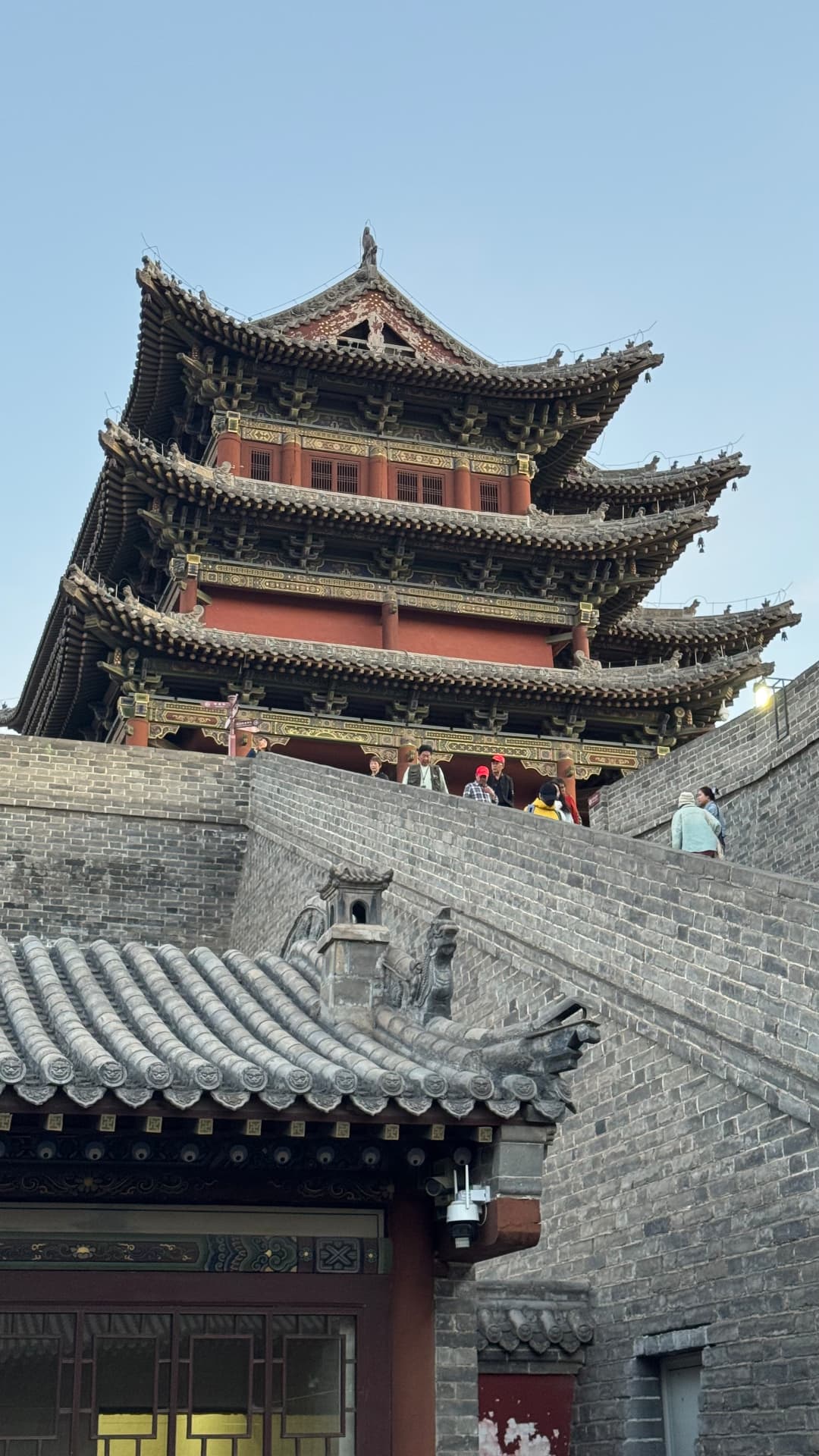
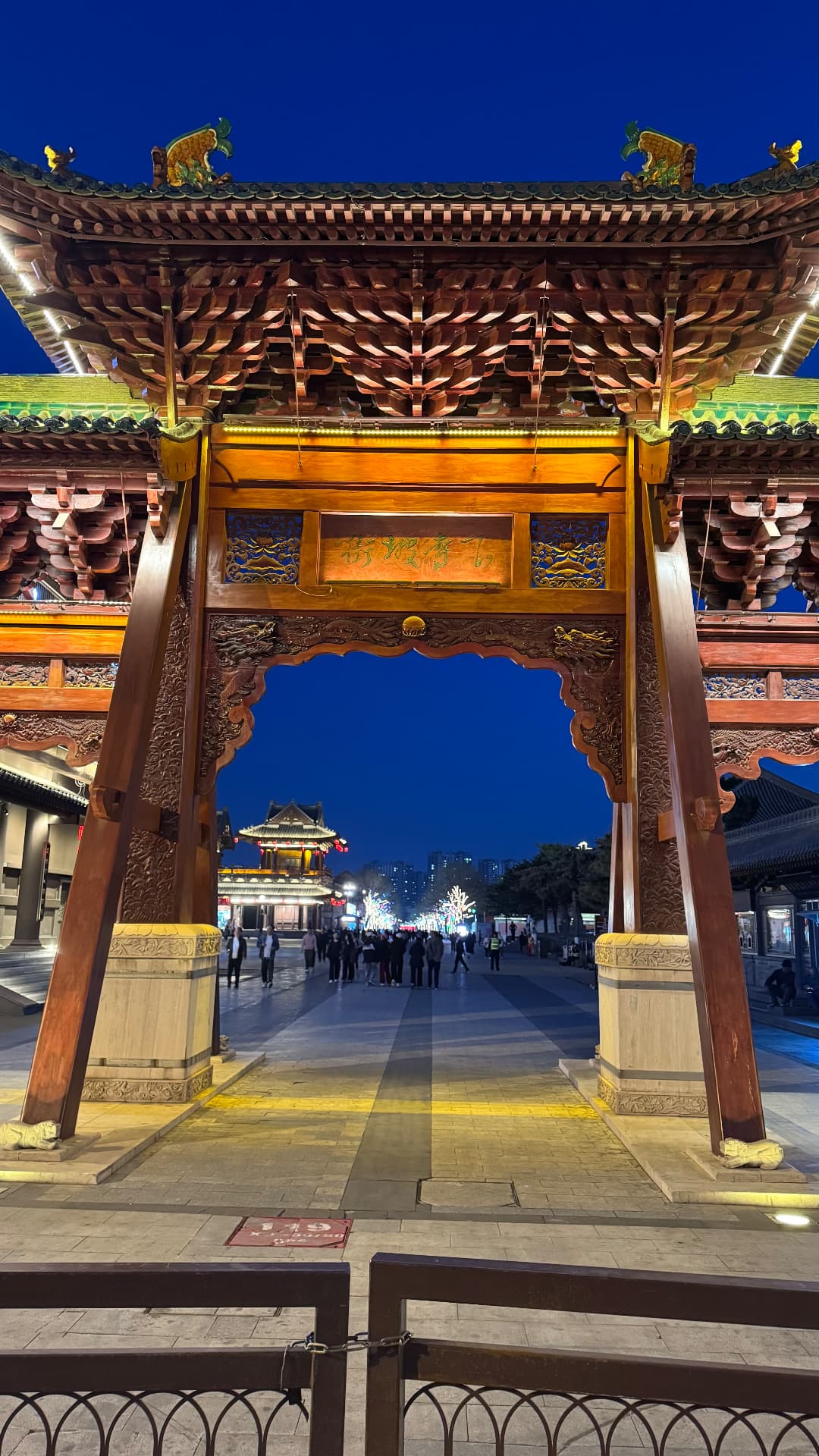
大同古城墙
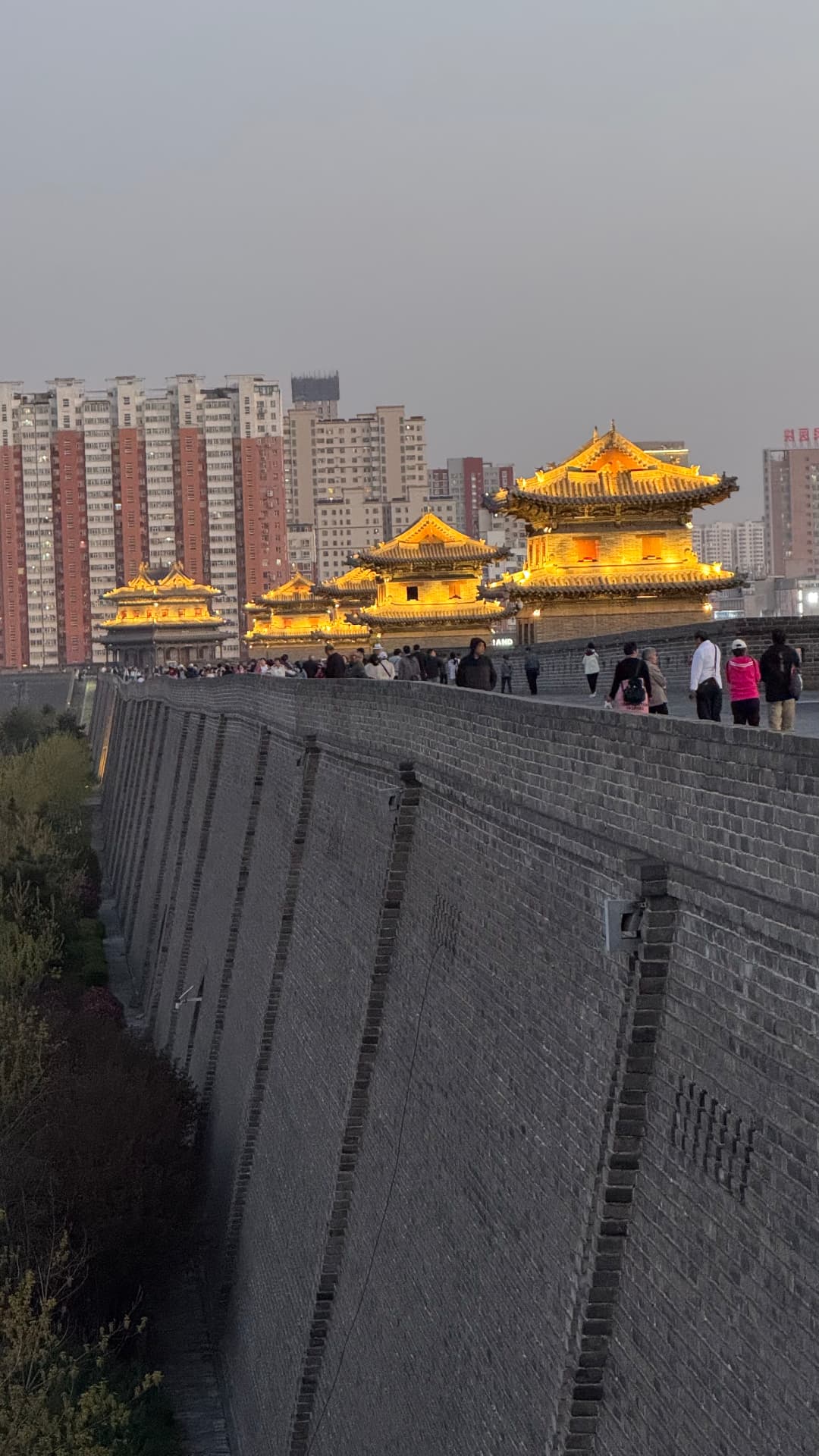
Datong Ancient City Wall
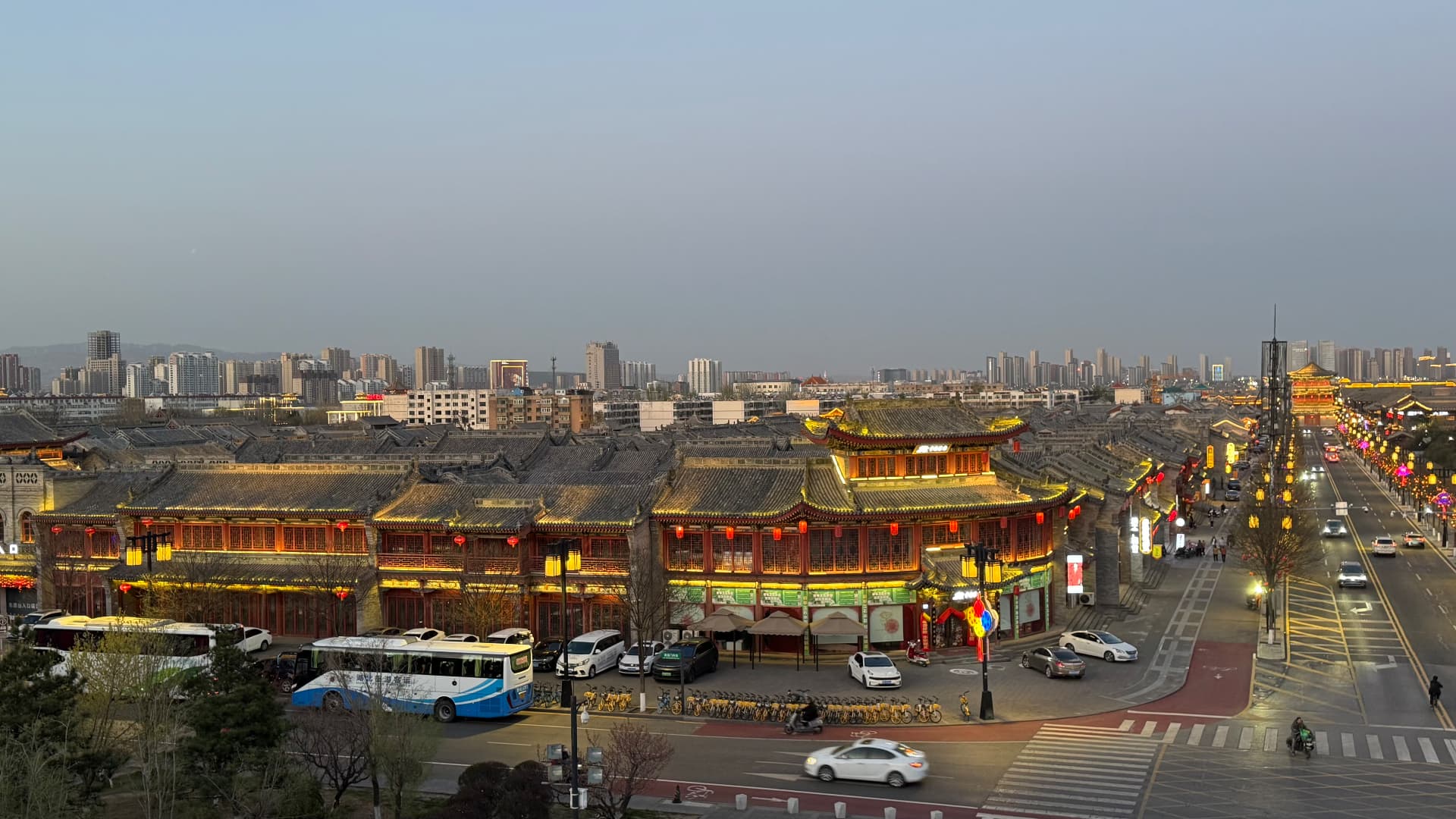
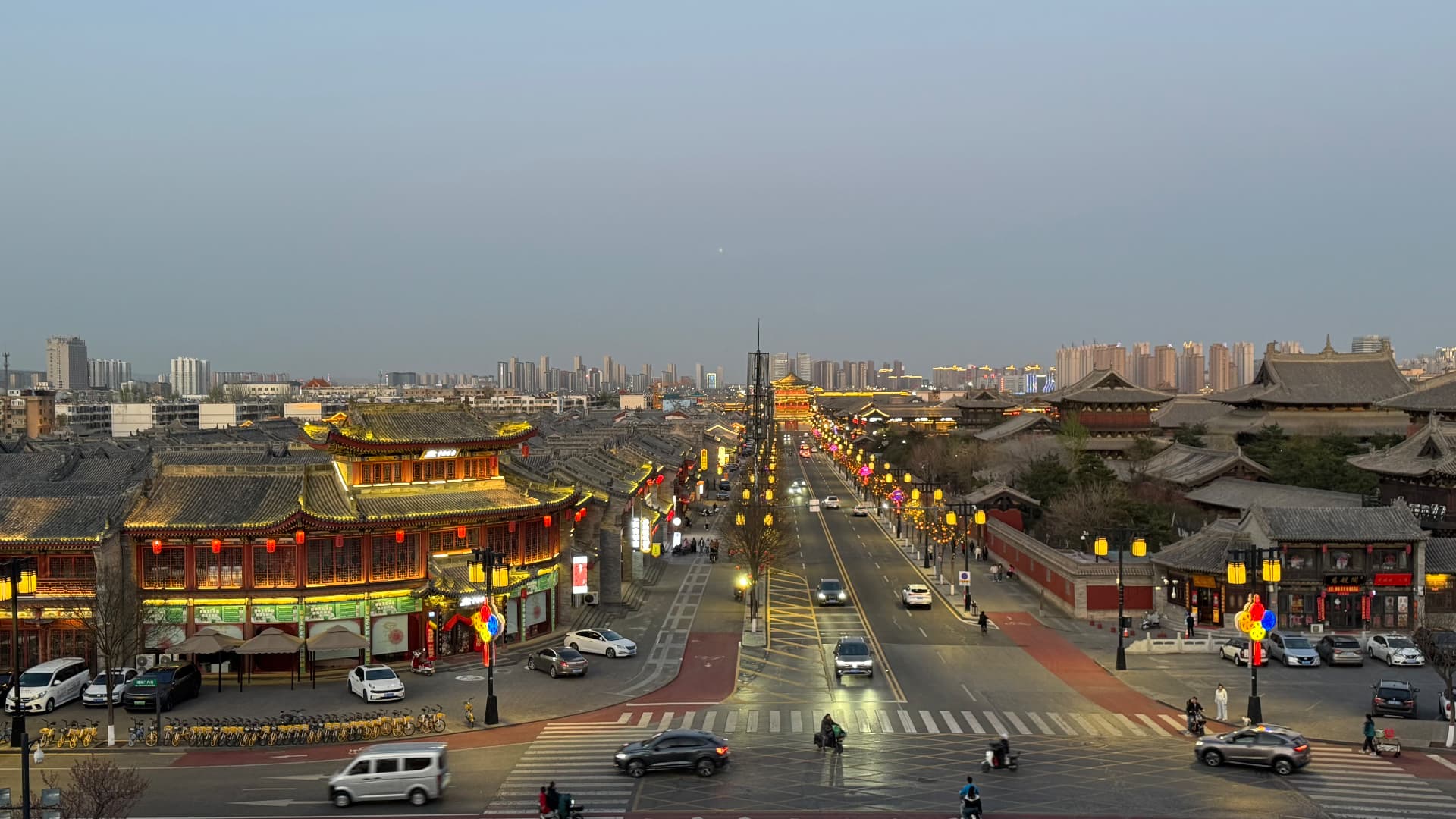
The ancient city wall of Datong was constructed upon the remnants of the Ming Dynasty city wall dating to 1372. Its square plan extends 1.8 kilometres from east to west and 1.82 kilometres from north to south, with a total circumference of 7,270.7 metres and an enclosed area of 3.28 square kilometres.
The wall is reinforced with triple-layered soil. Its outer surface is faced with carefully arranged stone strips, slabs, and square blocks, while the upper portion is covered with brick. Historically, the inner side was brick-faced only near the city gates; the reconstructed wall uses brick on both its inner and outer surfaces.
The wall measures approximately 18 metres wide at its base and 12 metres across the top, reaching a maximum top width of 16.6 metres. At 14 metres high—two metres taller than Xi’an’s ancient city wall—it is regarded as the highest ancient city wall in China.
Datong · Shanxi · China
Day 7 · April 2025
雁门关
Yanmen Pass
Yanmen Pass was an important gateway between ancient China and the invaders from the north. The Great Wall of China was able to prevent such invasion.
Photographs from this stop will be added here.
Dai County · Shanxi · China
Day 8 · April 2025
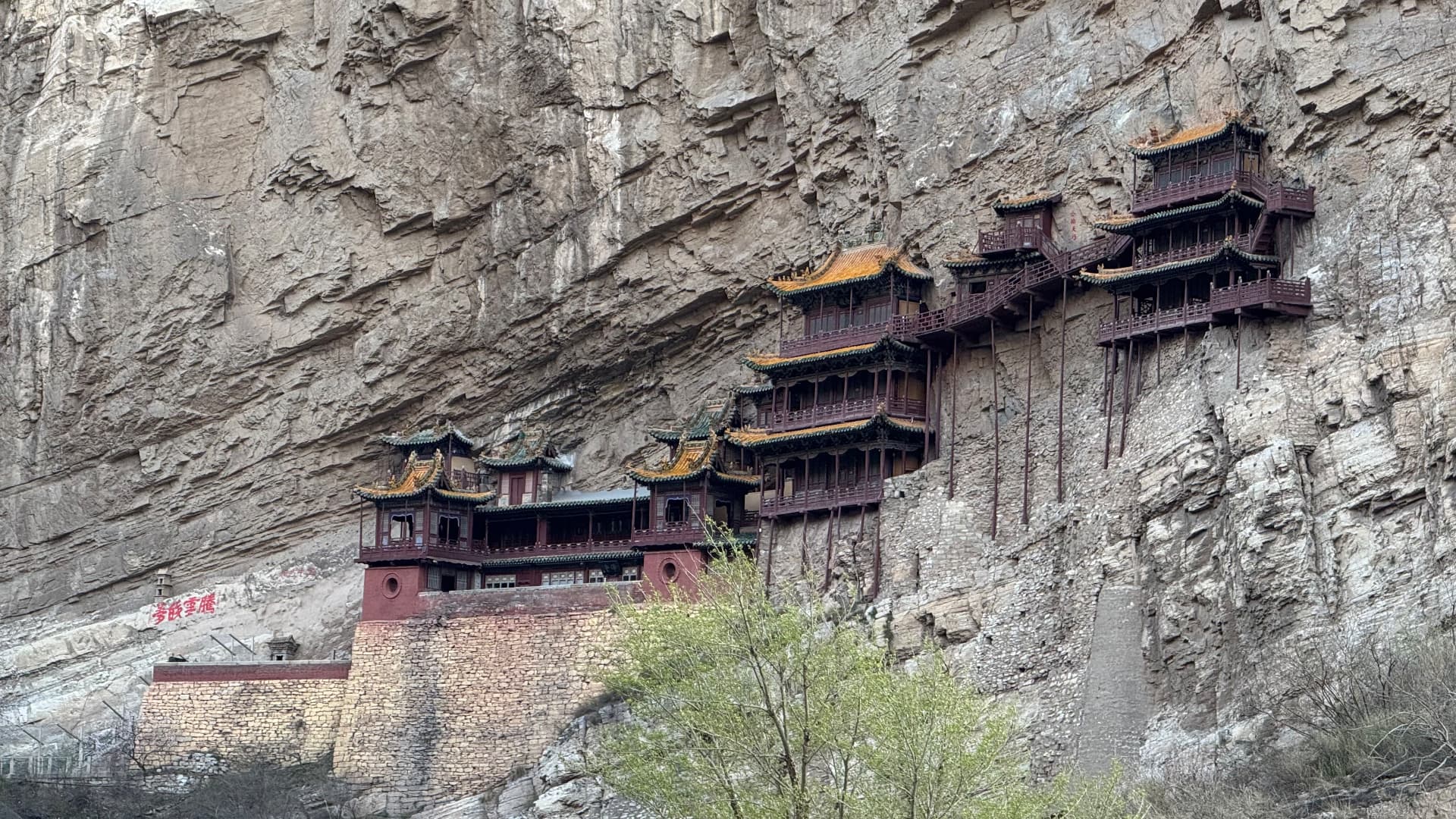
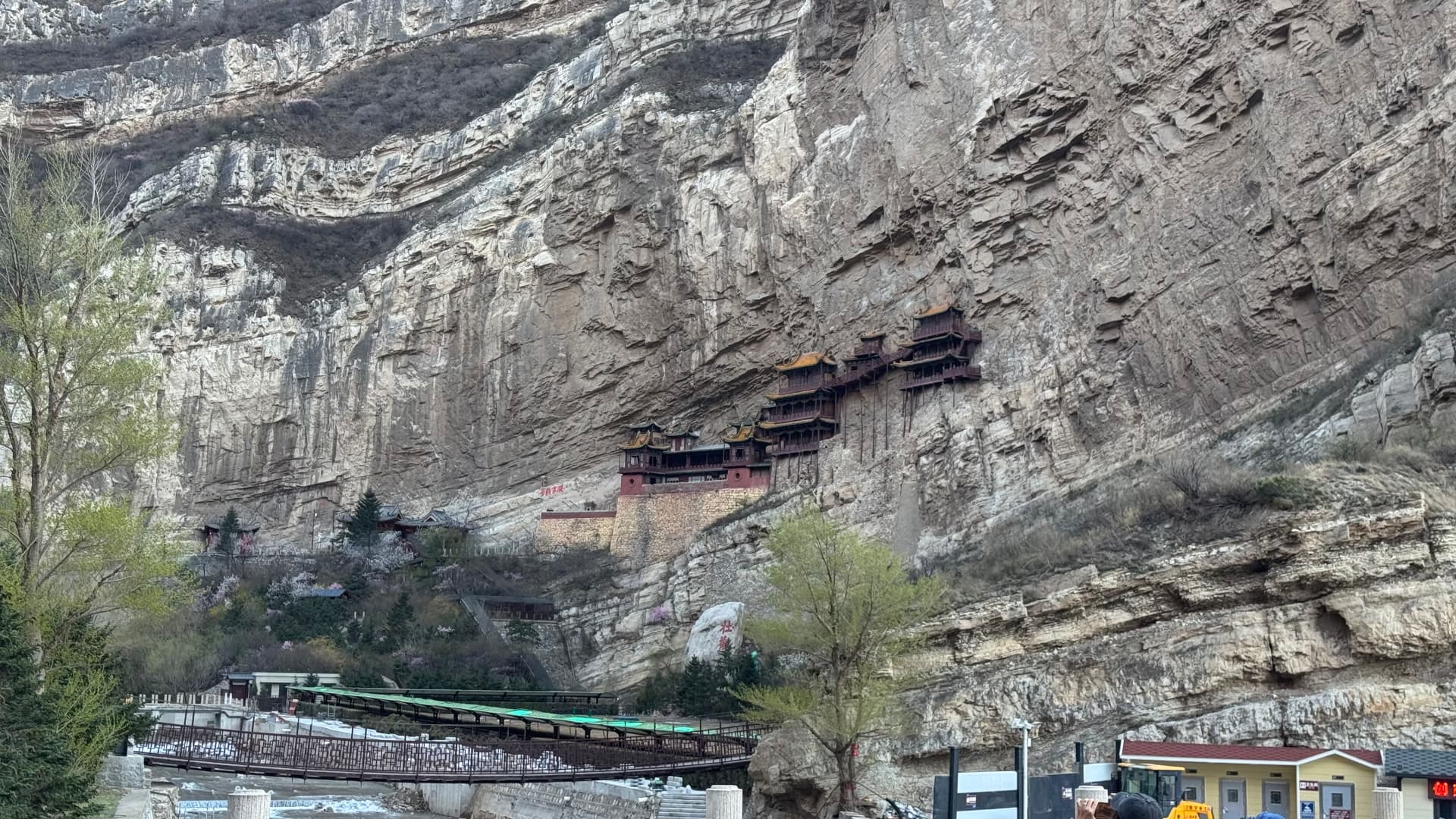
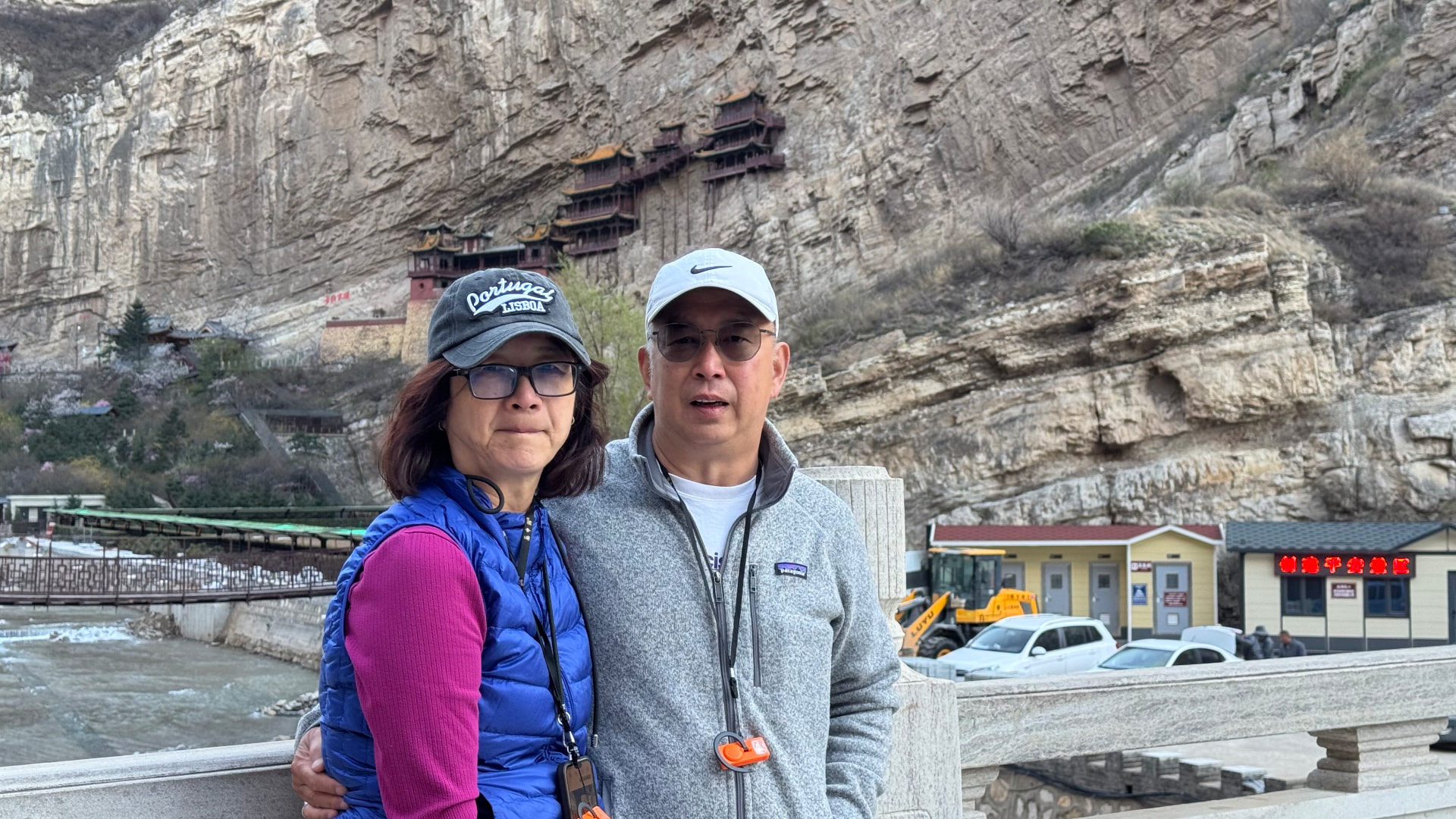
悬空寺
Hanging Temple
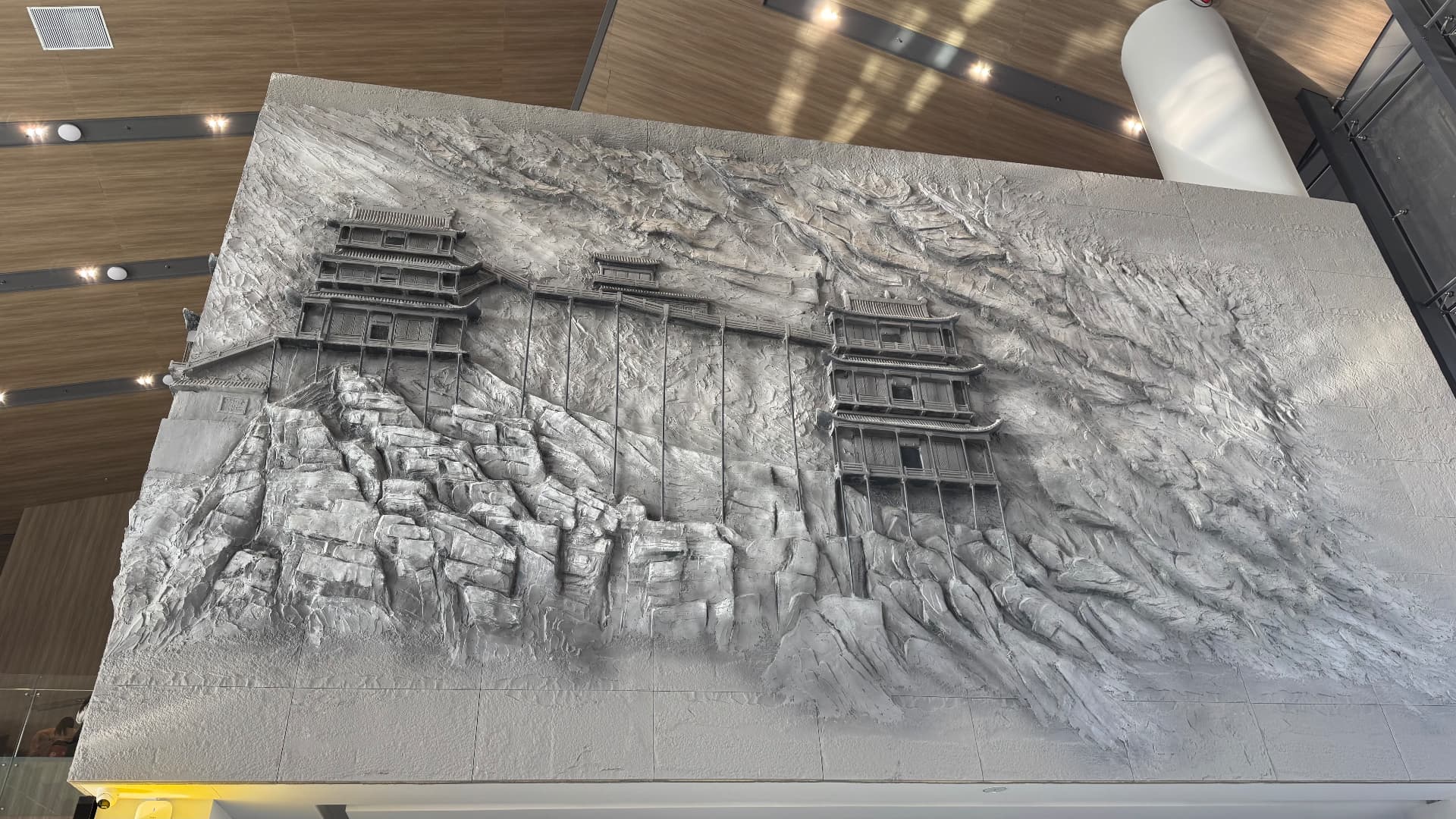
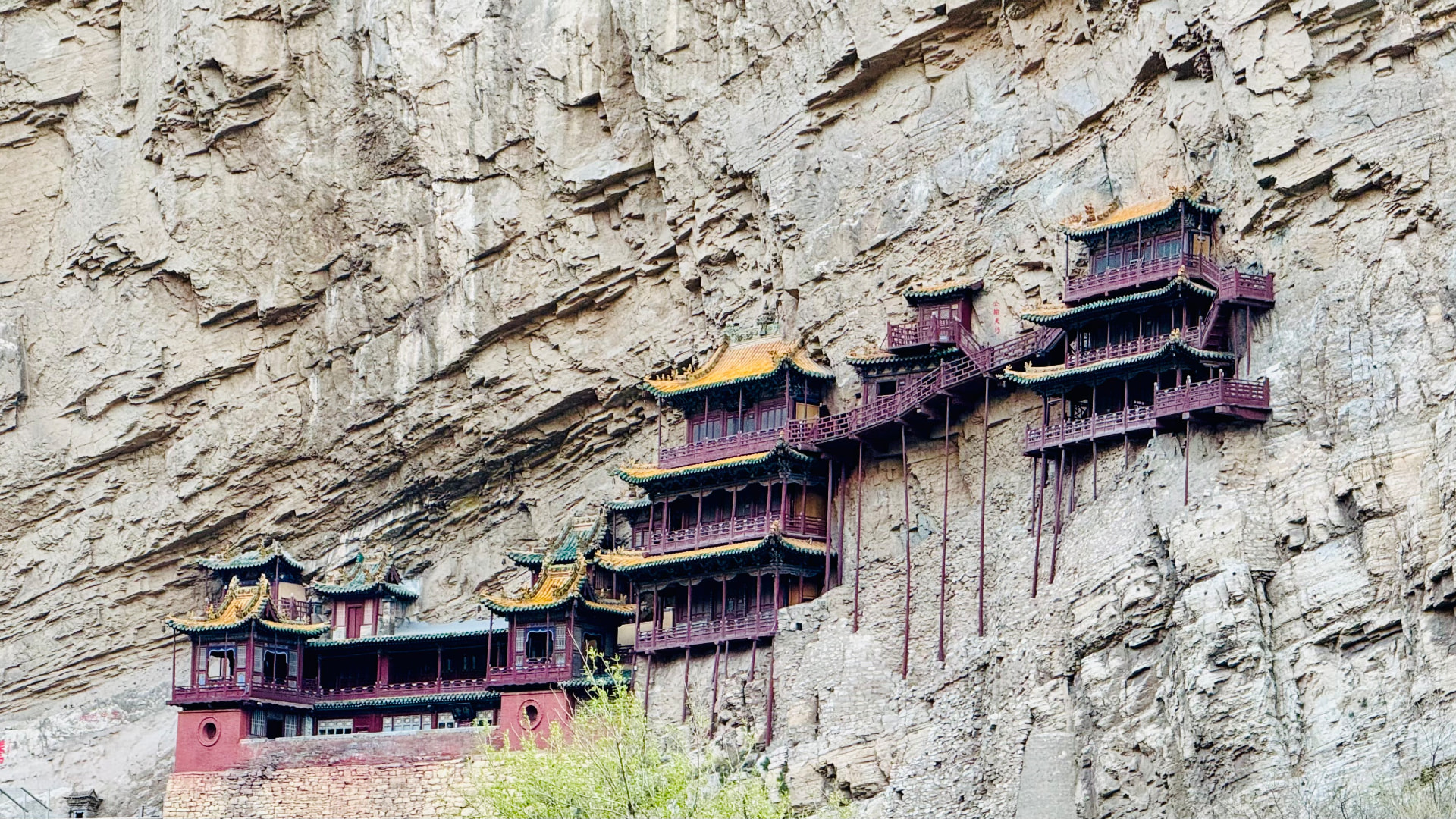
Perched on the sheer cliff face of Mount Heng, the Hanging Temple (Xuánkōng Sì) appears to float above the narrow gorge below. Wooden pillars and crossbeams, set into the rock itself, carry the temple outward from the cliff — a structure that seems to defy the mountain it rests against.
In December 2010, Time magazine selected the world's ten most extraordinary and dangerous buildings, and the Hengshan Hanging Temple was among them. The temple also appears in the martial arts novel 笑傲江湖 (The Smiling, Proud Wanderer), and the poet Li Bai is said to have traveled here and been awestruck by its wonder.
To build a temple halfway up a sheer mountain is extraordinary. The Hanging Temple is renowned for its mysterious character in the history of ancient and modern architecture — its boldness, ingenuity, and fearlessness are admirable and breathtaking.
Hunyuan · Shanxi · China
Day 8 · April 2025
应县木塔
Yingxian Wooden Pagoda
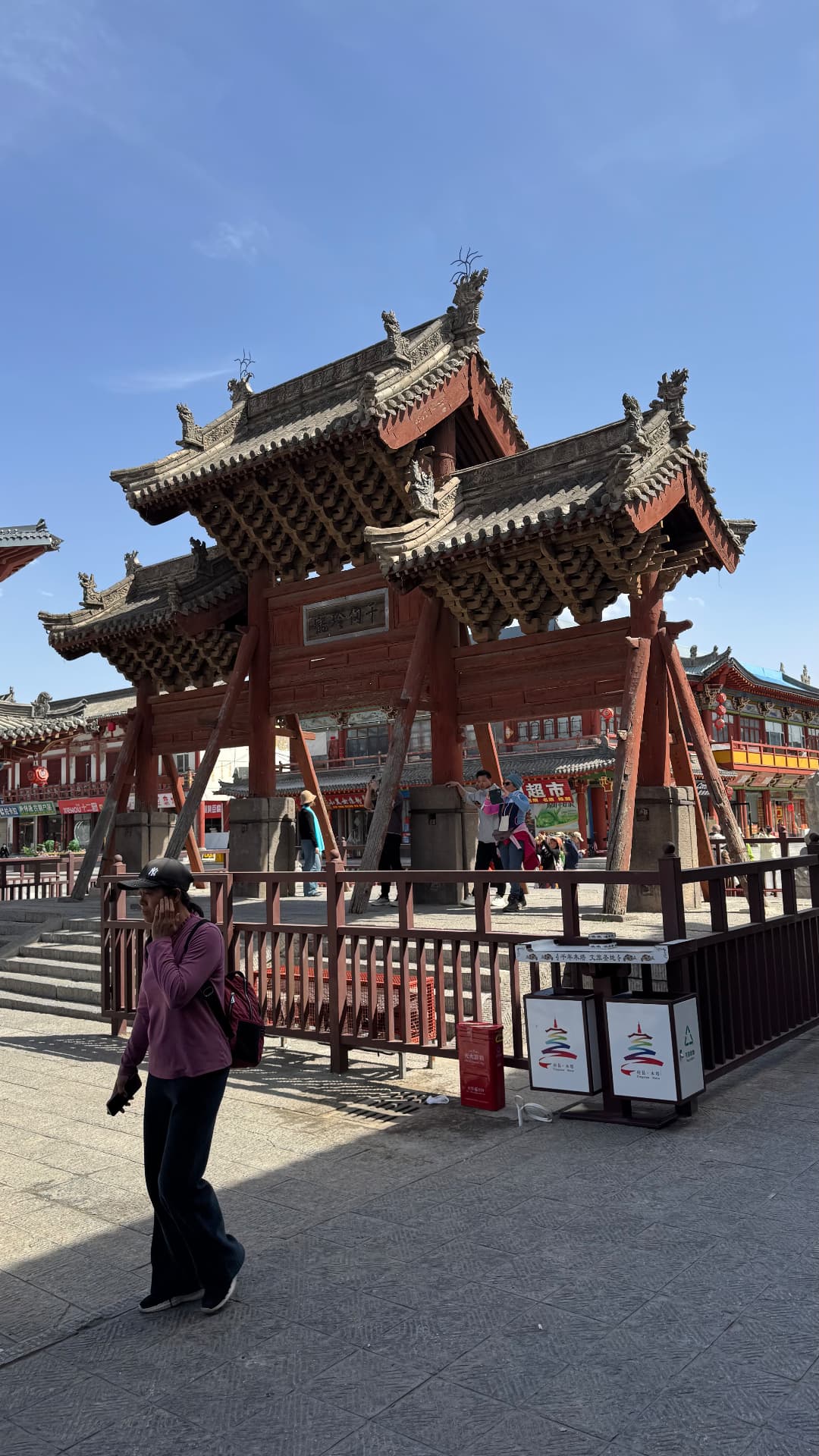
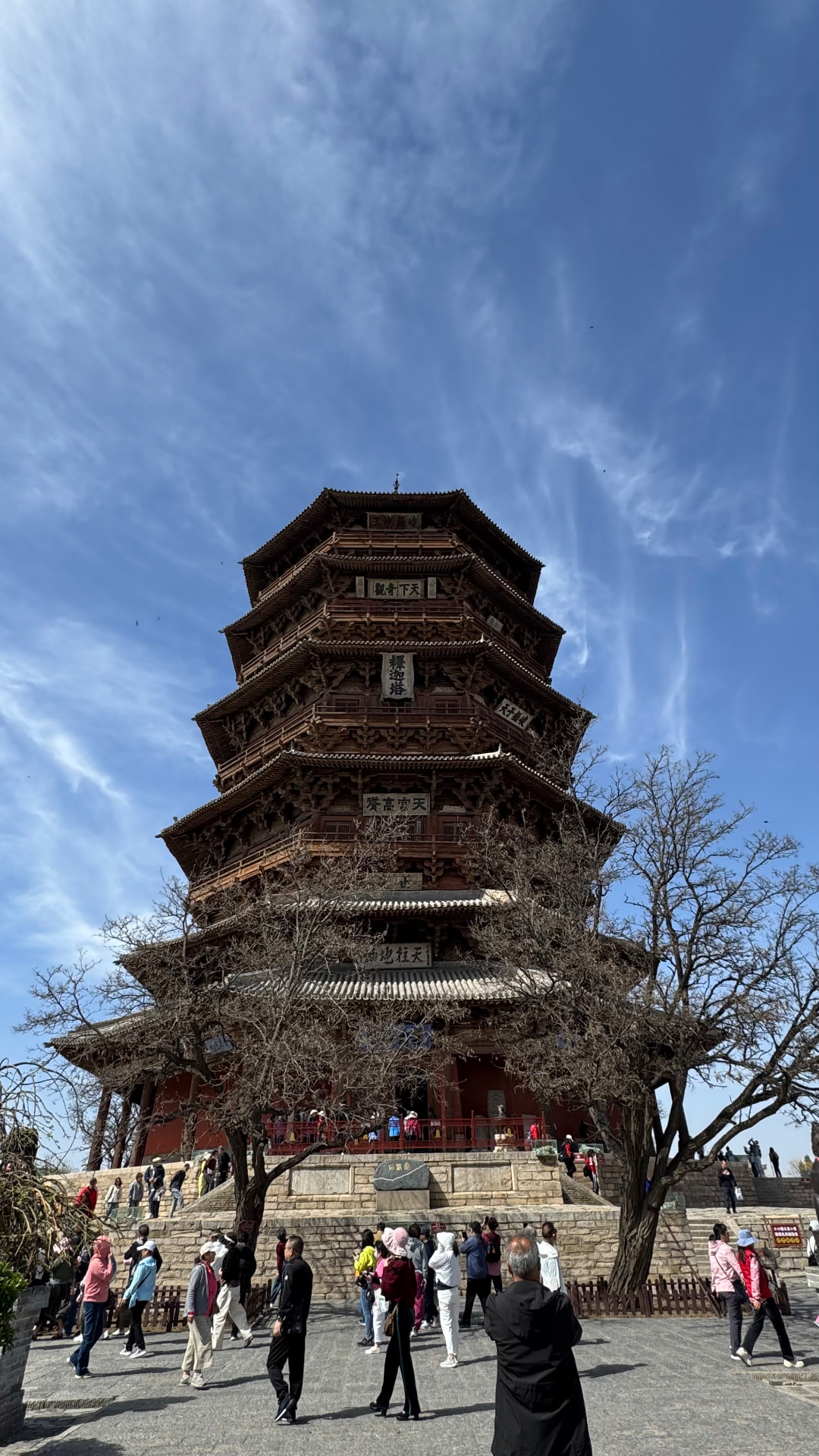
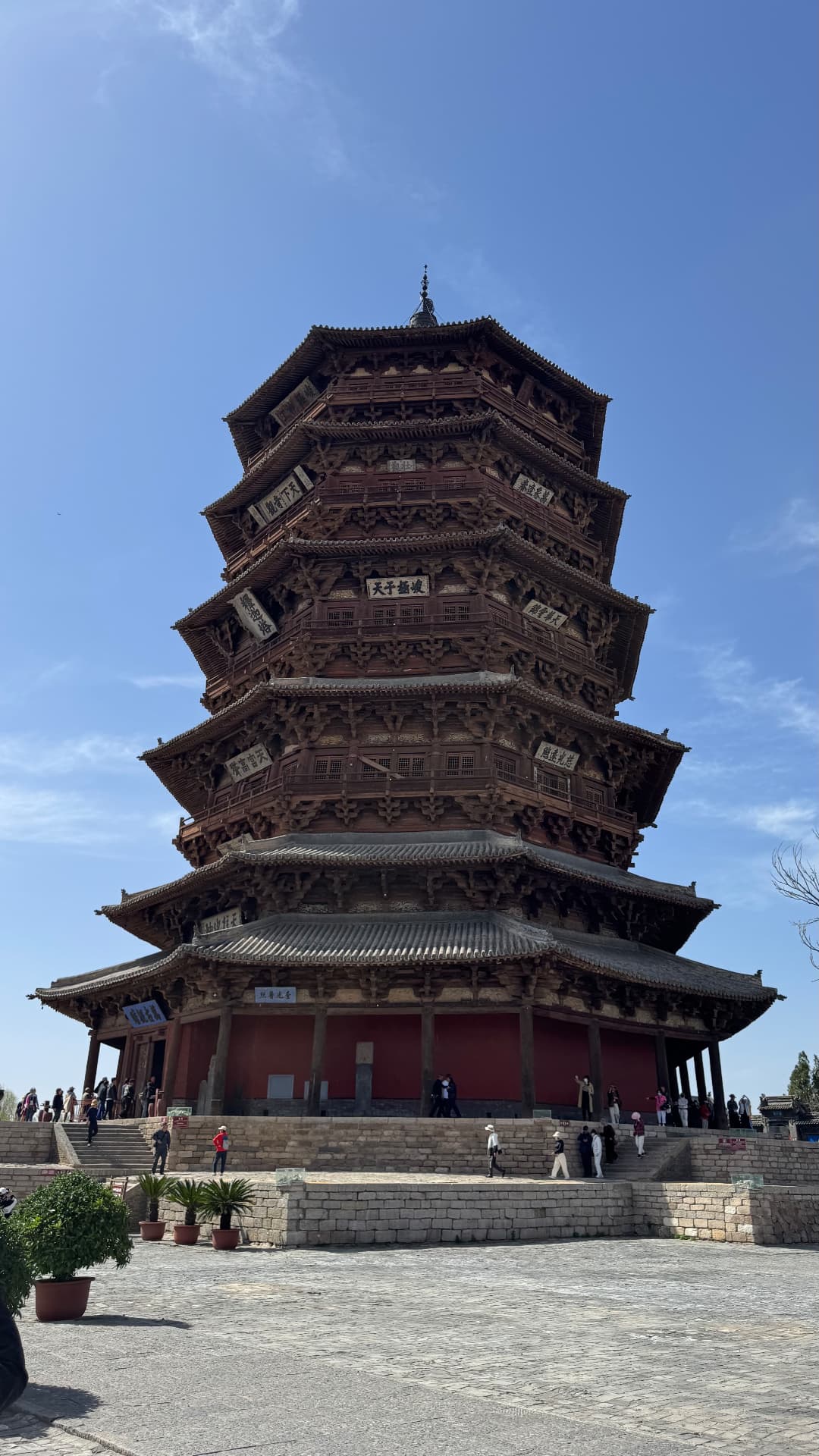
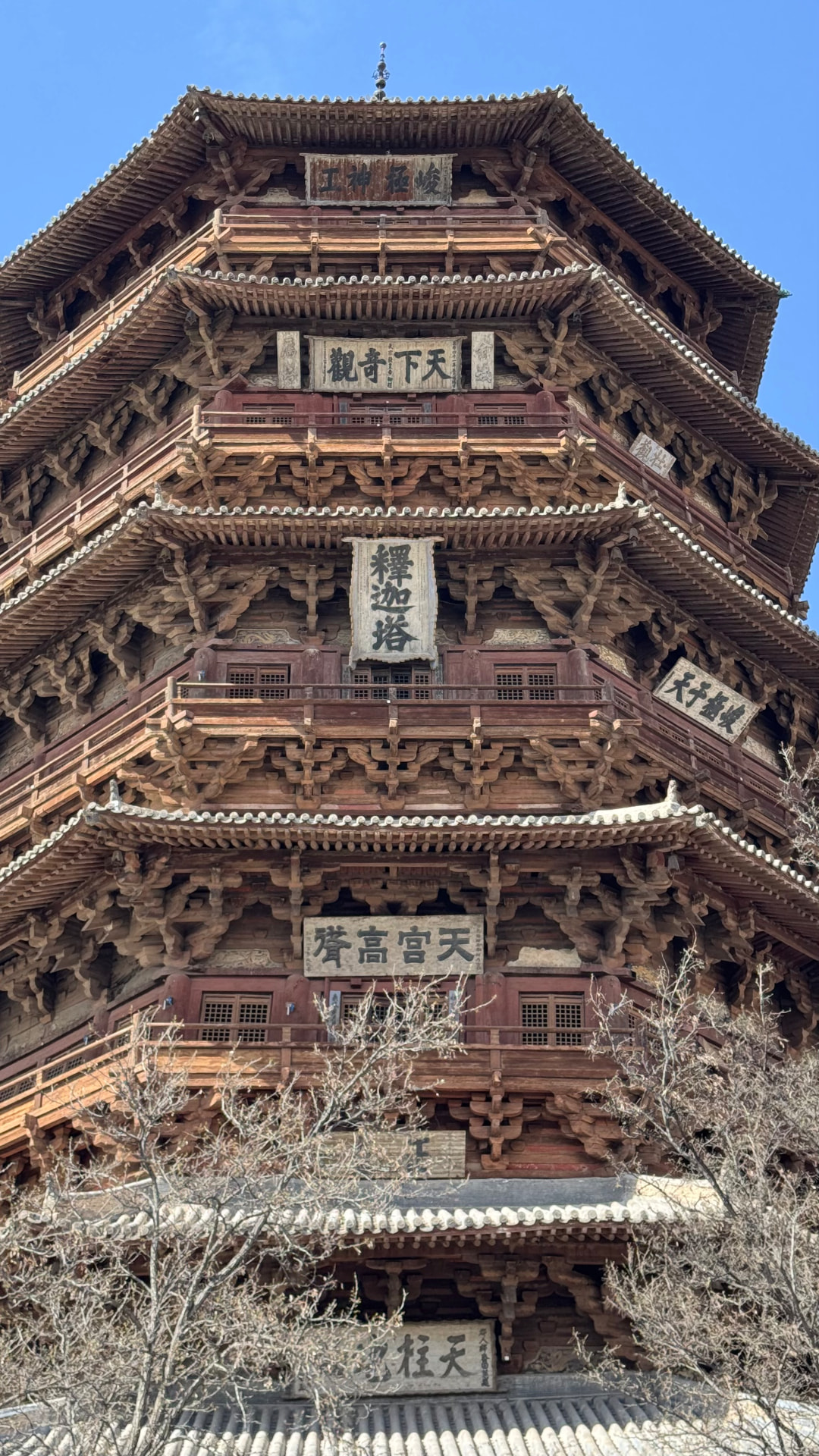
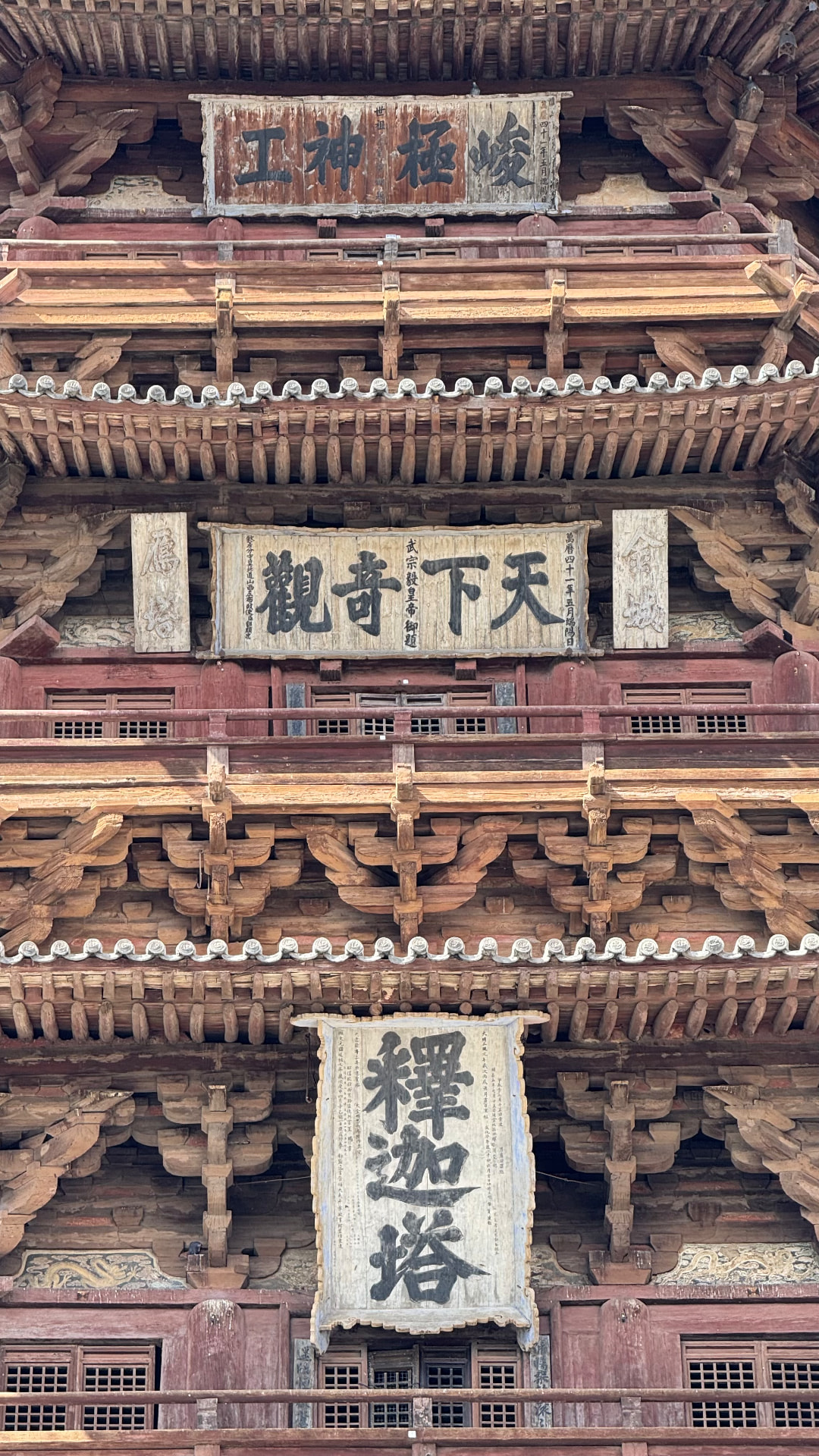
The second stop of the day: the Yingxian Wooden Pagoda — also known as the Buddha Palace Temple Pagoda, or Shakya Pagoda — built in 1056 AD. It stands 67.31 metres tall, measures 30.27 metres across at the ground floor, and weighs roughly 7,400 tons.
In 1961 the State Council recognised it as a national key cultural relics protection unit, and in September 2016 Guinness World Records named it the world's tallest wooden tower.
Visitors meet a structure that is stable and dignified, with well-judged proportion and a graceful outline. Ancient texts describe it as “the beauty of the floating map,” and it remains the centrepiece of the temple.
The Buddhist palace temple sits in the north-western corner of Ying County, Shanxi. Facing north, it covers roughly 25,000 square metres along a pronounced central axis: the mountain gate, Buddha Tower, Daxiong Treasure Palace, and Shakya Pagoda arranged from south to north, with the Daxiong Treasure Hall behind the pagoda. The bell and drum towers, built during the Ming dynasty, stand on the eastern and western sides of the temple's front.
Ying County · Shanxi · China
Day 8 · April 2025
云冈石窟
Yungang Grottoes
Yungang Grottoes, with a history spanning over 1,500 years, stand as one of the three most renowned grottoes in China, alongside the Mogao Grottoes in Dunhuang and the Longmen Grottoes in Luoyang.
The grottoes comprise five principal caves and an additional 209 secondary caves, collectively housing approximately 51,000 statues. Marvelling at the thousands of individual Buddhist sculptures that adorn the caves offers an immersive experience of China and Buddhism's historical and cultural heritage.
Photographs from this stop will be added here.
Datong · Shanxi · China
Day 9 · April 2025
五台山
WuTai Mountain
WuTai Mountain (五台山) in Shanxi is one of China's four sacred Buddhist mountains. Visiting WuTai, JiuHua, and PuTuo, we intend to visit EMei Mountain soon to fulfil our pilgrimage.
Each of the four mountains is associated with a Bodhisattva. Mount Wutai (山西五台山) is associated with Manjushri; Mount Putuo (浙江省普陀山) with Avalokiteśvara (Guanyin); Mount Jiuhua (安徽九华山) with Ksitigarbha; and Mount Emei (四川峨眉山) with Samantabhadra. These mountains are sacred and are pilgrimage sites for Buddhists in China and beyond.
Photographs from this stop will be added here.
Wutai County · Shanxi · China
April 2025
厦门
Xiamen
We flew to Xiamen from Penang. The purpose of the trip was to rest well before the ten-day Shanxi journey — our first time in Xiamen. It felt like Penang: the food, the weather, the people, the language.
Photographs from Xiamen will be added here.
Fujian · China